


We’ve all come across (or used in some way) the Net Promoter Score (NPS) to measure consumer loyalty to a specific organization, in a way that has changed little since the publication of the 2003 Harvard Business Review article “The One Number You Need To Grow” by Frederick F. Reichheld, which popularized the famous line: “On a scale from 0 to 10, how likely are you to recommend our company to a friend?”
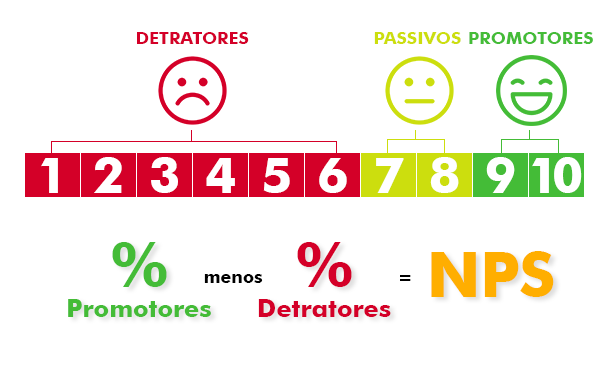
The Scope of NPS
In the book The Ultimate Question, released three years after the original article, Reichheld offers an interesting view through practical NPS use cases. Adapting one of his examples, let’s suppose an end consumer wants to buy an iPhone on a major e-commerce website, and while entering payment information, the site runs into issues. Right on that payment page, a flashing green pop-up appears asking for a 1-to-10 rating on whether the user would recommend the product to a friend.
Even in this single scenario, it’s possible to identify several improvement opportunities:
-
The NPS survey should be shown after the user’s experience to measure loyalty, not during the purchase process.
-
It must be clear who the NPS is evaluating: in this example, is it the e-commerce site itself, or Apple? The context of the question is extremely important.
-
Colors and icons can unintentionally suggest a “right” score (for instance, green being associated with something positive, and red with something negative, if colors are also tied to the scores). Remaining impartial is crucial to obtain honest feedback from the customer/user.
-
Satisfaction should not be confused with loyalty: let’s assume the user had a bad experience while entering payment details, but when the iPhone arrived, they were extremely satisfied, so much so that they later bought more Apple products. Even if part of the journey was frustrating, that may not prevent their loyalty from remaining intact.
Satisfaction ≠ Loyalty
Let’s go deeper into that last point: there is a crucial difference between satisfaction—the contentment that comes from having expectations met, and loyalty, which can be defined as fidelity to commitments made.
A consumer who gives a 9 or 10 after purchasing a service or product shows they are willing to recommend it to friends and acquaintances—meaning they can indirectly help attract new customers and expand share with their own network. It’s a way to “evangelize” customers through a direct action with one of them.
Of course, a user who rates a product positively via NPS is very likely satisfied with it. But using NPS to measure satisfaction itself is like asking “Do you love me?” after a first date with someone who’s still just a crush: it’s a great question, but the timing could be better.
To measure satisfaction specifically, there are other approaches designed for that purpose:
Customer Satisfaction Score (CSAT)
CSAT, for example, is a metric used to measure customer satisfaction with a company at different stages of the same journey. This model also prioritizes simplicity, making it easier for users to respond and generating important insights that help improve processes. Some practical examples include:
-
What is your satisfaction level with the delivery time of our product?
-
What is your satisfaction level with the service you received?
-
What is your satisfaction level with the benefits you obtained from our solution?
These questions can be answered using a scale from 1 to 5 or 1 to 10, for instance, where 1 represents “totally dissatisfied” and 5 or 10 represents “totally satisfied.” Another option is not to show numbers directly, but instead use a 1-to-5 scale with labels such as:
-
Totally satisfied
-
Satisfied
-
Neutral
-
Slightly satisfied
-
Totally dissatisfied
For calculation, it’s simple: identify the number of responses for each rating, add the responses marked as “Totally satisfied” and “Satisfied,” divide by the total number of responses, and convert to a percentage.
In a practical example, let’s suppose a company ran 500 CSAT surveys and got the following ratings:
-
25 customers answered 1, meaning “very dissatisfied”;
-
75 customers answered 2, meaning “dissatisfied”;
-
140 customers answered 3, meaning “neutral”;
-
200 customers answered 4, meaning “satisfied”;
-
60 customers answered 5, meaning “very satisfied”.
In this case: CSAT = (200 + 60) / 500, which equals 52%.
Because CSAT resembles NPS in how consumers respond, it’s important to highlight that CSAT is more flexible and can be applied at specific moments in the journey because it measures satisfaction directly and does not necessarily need to quantify the entire relationship.
Customer Effort Score (CES)
Another well-known metric is CES, created by the Corporate Executive Board in 2010 and also popularized through a Harvard Business Review article titled “Stop Trying to Delight Your Customers.” This measurement allows customers to rate how easy it was to use products or services, typically ranging from “very difficult” to “very easy.”
CES gained traction because the amount of effort a user must invest proved to be a determining factor in the likelihood of the customer buying from the company again. It also showed that while high effort increases the likelihood that the consumer won’t become loyal, low effort does not necessarily make them loyal. This impact relates to the processes involved during the user experience—not to the final product/service as in NPS.
A high CES does not necessarily mean a satisfied customer, and it does not precisely measure loyalty. CES is used to detect friction and collect feedback by measuring how easy the interaction was.
Illustrating this metric, let’s suppose a company ran 200 CES surveys and obtained the following ratings:
-
15 customers answered 1, meaning “very difficult”;
-
20 customers answered 2, meaning “difficult”;
-
55 customers answered 3, meaning “neutral”;
-
80 customers answered 4, meaning “easy”;
-
30 customers answered 5, meaning “very easy”.
In this case:
CES = (15×1) + (20×2) + (55×3) + (80×4) + (30×5) / 200
That is, 690/200, resulting in a CES of 3.45 in the example above.
How to Choose Which System to Use
In short, when considering an evaluation system, we can separate the three mentioned above as follows:
Net Promoter Score (NPS)
Evaluates the consumer’s relationship with the product/service as a whole, considering whether they would be willing to spread their perceptions organically by recommending it to friends and family. It reflects the loyalty they feel toward a brand—an extremely relevant sentiment for the company’s future business.
Customer Satisfaction Score (CSAT)
More flexible, it can be used to capture satisfaction with a specific experience or with a product/service overall. It can be adapted to different moments in the user journey while remaining simple and fast to encourage engagement. The keyword here is satisfaction, not loyalty.
Customer Effort Score (CES)
Focused on evaluating steps within a single user experience: ease during payment-method registration on a website, or the difficulty of reaching checkout when buying through an app are recurring examples. It measures how the user interacts with a specific journey within a product/service.
Regardless of which is ideal for a given company scenario, it’s always important to focus on the results themselves (and not manipulate them in ways that make them look better than they really are), with the goal of improving the performance of the product/service in question. Only through transparency in these results can we reach the desired outcomes.
The methodology is as simple as it is effective in practice: offering an easy-to-measure scale so the customer can provide a quick evaluation with little or no friction in their consumption experience. However, nearly 20 years after this metric became widespread, it’s still not uncommon to see ineffective ways of applying it.


